Lacquering and oiling
The finish decides both how the floor looks and how long it stays that way.
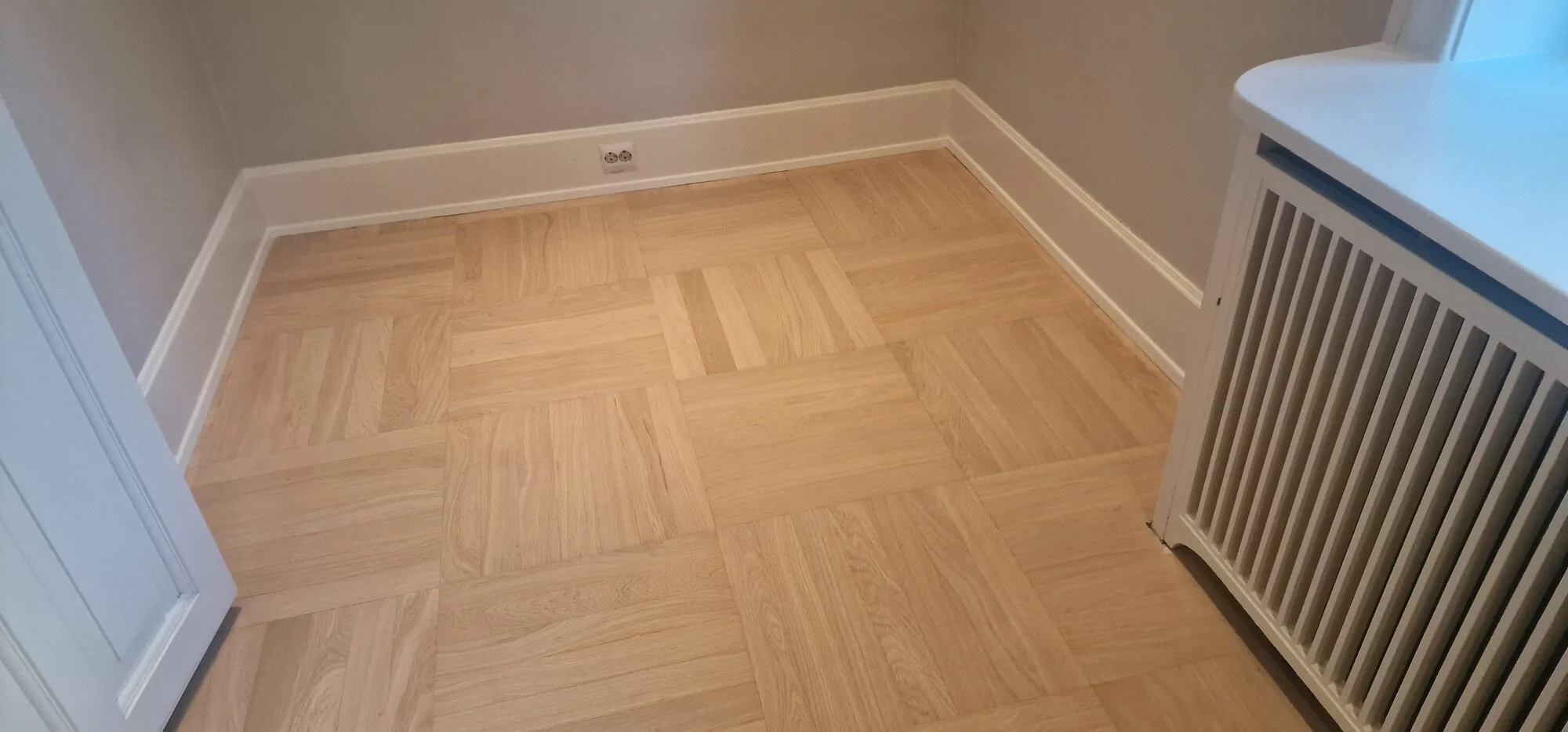
After sanding comes the finish, which decides both how long the floor stays looking good and how it reads in the room.
Lacquer gives a hard, sealed surface that takes a lot of traffic and is easy to clean. Oil soaks into the timber, gives a matter and more living look, and lets you refresh a single worn patch without redoing the whole room.
We go through the difference during the site visit and put sample patches on your own floor, so you can see how they actually behave against your timber.
What's included
- Water-based lacquer in matt, satin or gloss
- Hardwax oil for a softer look and easy spot repair
- White pigment for a lighter floor, and colour to suit
- Three to four coats, with a light sanding between each
How we work.
- 01
Sample patches on your floor
The same lacquer looks different on oak and on pine. We put samples straight onto your floor, so you see the colour against your own timber and your own light.
- 02
Priming
The primer decides how yellow the floor goes. A neutral primer keeps oak light, a traditional one gives it a warmer tone.
- 03
Three to four coats
With a light sanding between coats, so the grain raised by the moisture in the lacquer is knocked back down.
- 04
Curing
You can walk carefully on the floor after a day. Full hardness takes two to three weeks, and in that time you should hold off on rugs and heavy furniture.
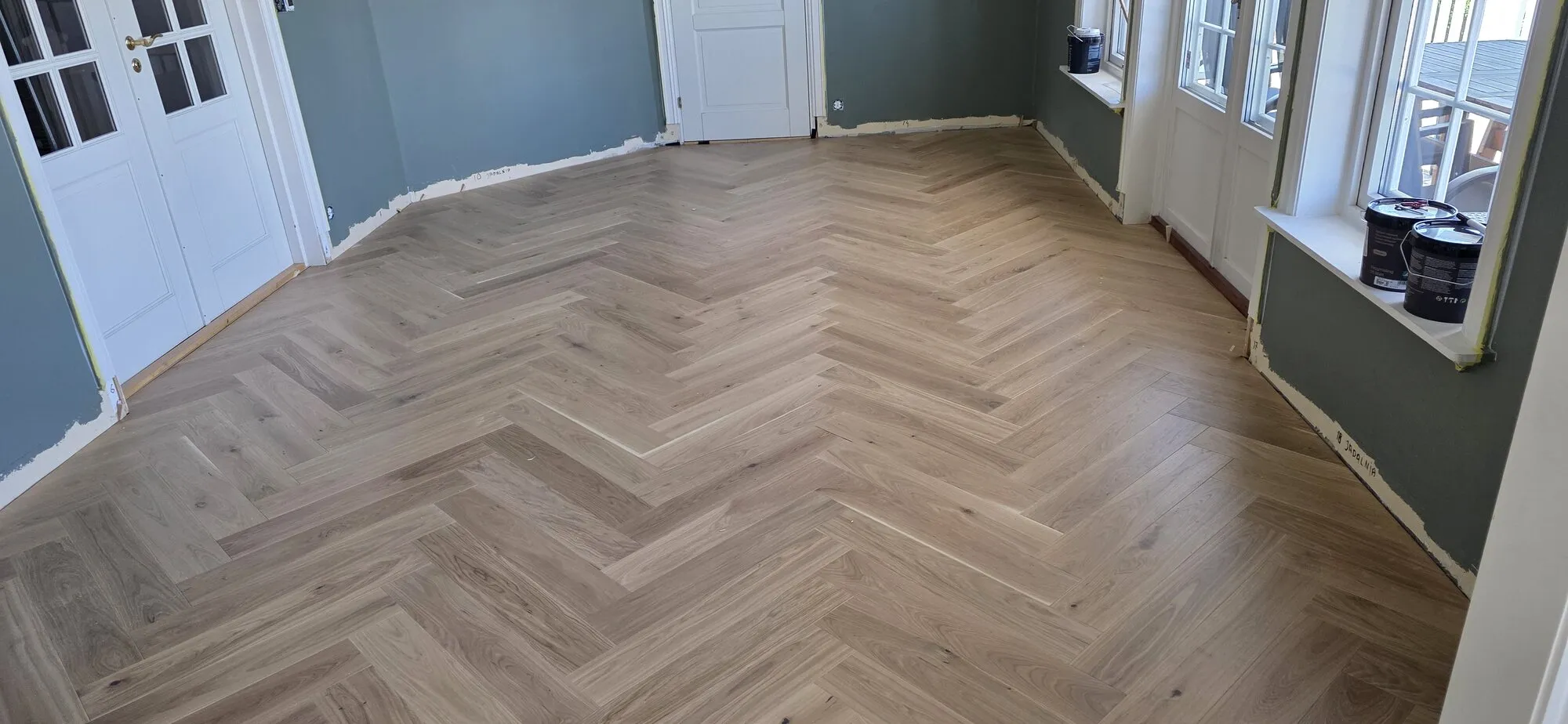
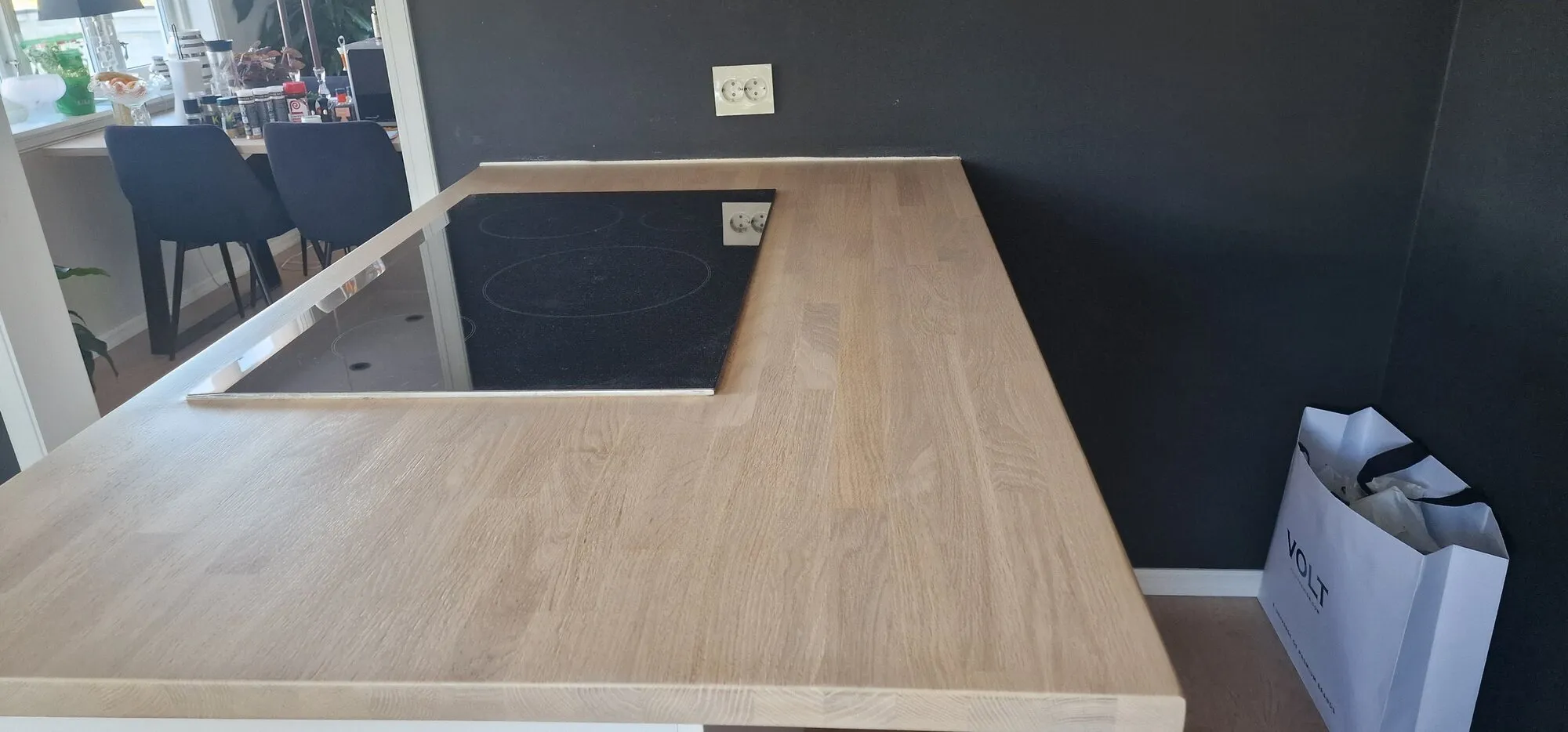
What it looks like.
All projects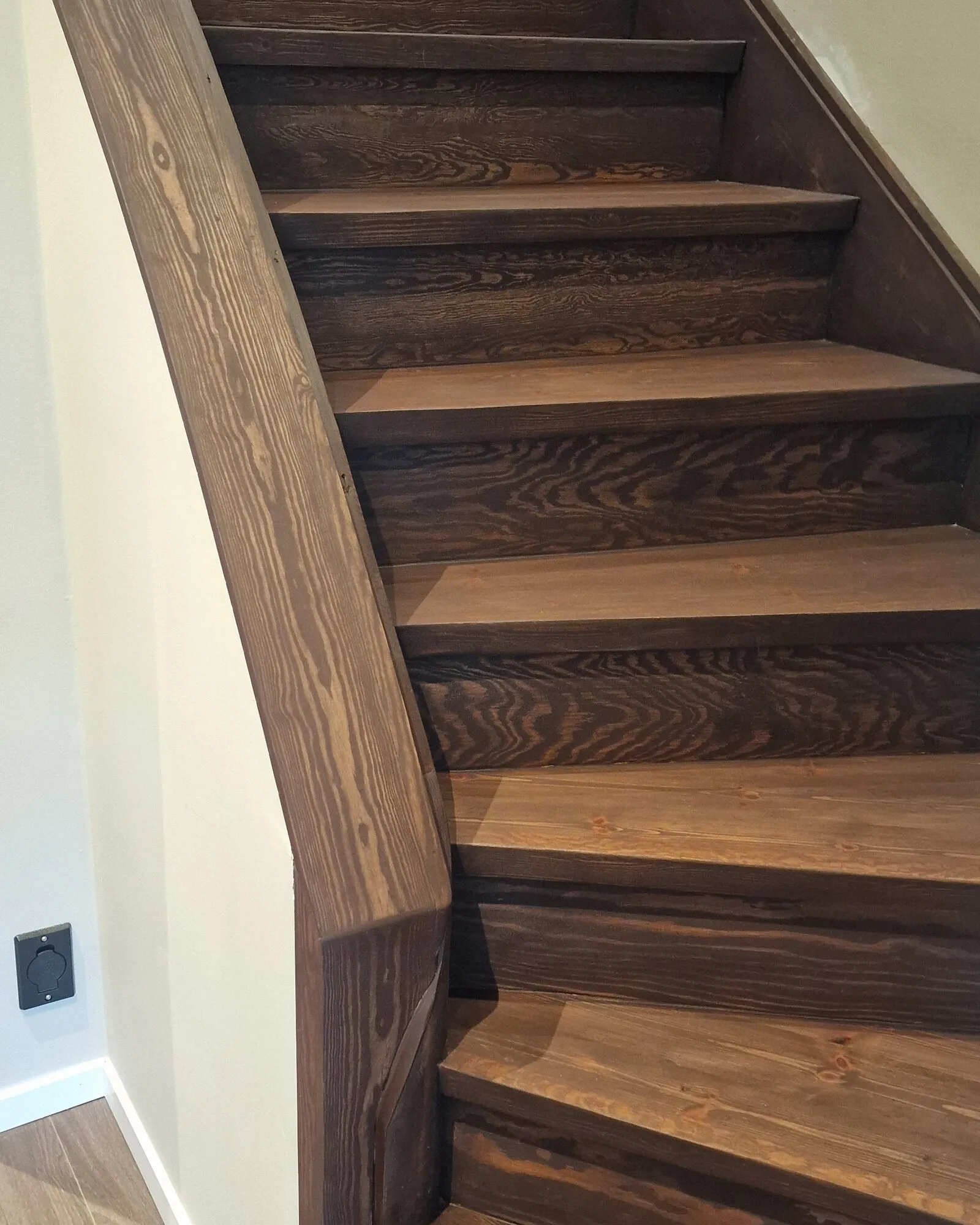
Questions we get often
Should I choose lacquer or oil?
Lacquer gives a hard, sealed surface that takes a lot and is easy to clean, but has to be sanded right back once it wears through. Oil soaks into the timber, gives a matter look, and lets you refresh a single worn patch without redoing the whole room.
How long does the floor need to be left alone?
You can walk carefully on it after a day. Furniture can go back after two to three days, while rugs should wait two to three weeks until the lacquer has finished curing.
Can you make the oak lighter?
Yes, with white pigmented oil. It holds back the yellowing oak otherwise picks up over the years. We use pigment rather than lye: lye is an older way of lightening a floor, mostly used on old pine, and gives less control over the final colour. The colour direction has to be agreed before we prime.
Other services
Shall we take a look at your floor?
The site visit is free and you get a fixed price in writing. Send us a few photos first if you want a rough idea straight away.