Floor sanding
We measure the wear layer first, and tell you straight if the floor is too thin to sand.
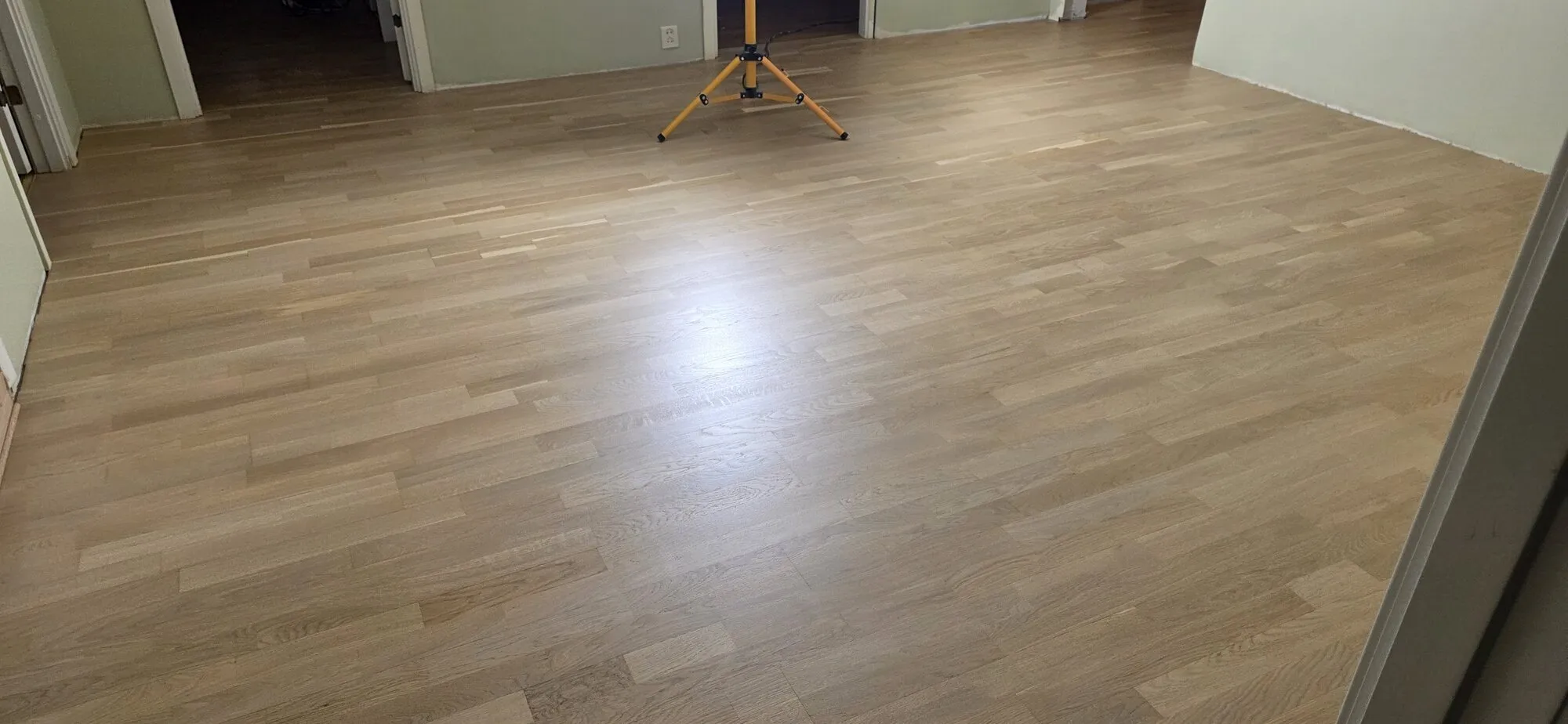
We sand parquet and solid wood back to fresh timber, so the floor gets back the colour and grain it had when it was new.
A wooden floor will usually take several sandings over its lifetime. If the wear layer is thick enough, sanding is both cheaper and better looking than laying a new floor.
We start by measuring the wear layer and looking at any damage. If the floor is too thin to sand, we say so straight away rather than cutting through the boards.
What's included
- Parquet, block parquet and solid oak, ash, pine and beech
- Step by step from coarse to fine grit for an even result
- Dust extraction on the machines, so most of the dust never reaches the room
- Edges and corners done by hand where the machine cannot reach
How we work.
- 01
We measure the wear layer
A wooden floor takes a set number of sandings. We measure how much timber is left above the tongue before we promise anything, and tell you if the floor will not take another round.
- 02
Covering and preparation
Skirting comes off where it is in the way, nails are punched down, and the room is sealed off from the rest of the home.
- 03
Coarse sanding
The first pass removes old lacquer, stain and wear. This is where most of the material goes.
- 04
Step by step down
We work down through the grits one step at a time. Skip a step and the scratches from the previous one stay in the timber and show through the lacquer.
- 05
Edges and corners
Edge sander along the walls, and by hand where the machine cannot reach. This is what separates an even floor from one with a dark band around the room.
What it looks like.
All projects
Questions we get often
How many times can a floor be sanded?
A solid wood floor will usually take five to ten sandings over its lifetime. Engineered parquet has a thinner wear layer, often two to four times, depending on the thickness above the tongue. We measure before we start.
How much dust does it make?
The machines have dust extraction that catches most of it at the source. Some fine dust still settles, so we seal off rooms that are not being sanded.
Do the skirting boards have to come off?
Not always. If the skirting is sound and there is enough clearance underneath, we sand up to it. If it does have to come off, we say so in advance: skirting that has been in place for decades often takes paint or plaster off the wall as it comes away, and putting that right is a decorating job, not a flooring one. You decide whether it is worth it.
Can you sand a floor with water damage?
Often yes, if the boards have dried out and have not cupped too badly. If the damage runs deep, we replace individual boards first and sand the whole surface afterwards, so the join does not show.
Other services
Shall we take a look at your floor?
The site visit is free and you get a fixed price in writing. Send us a few photos first if you want a rough idea straight away.